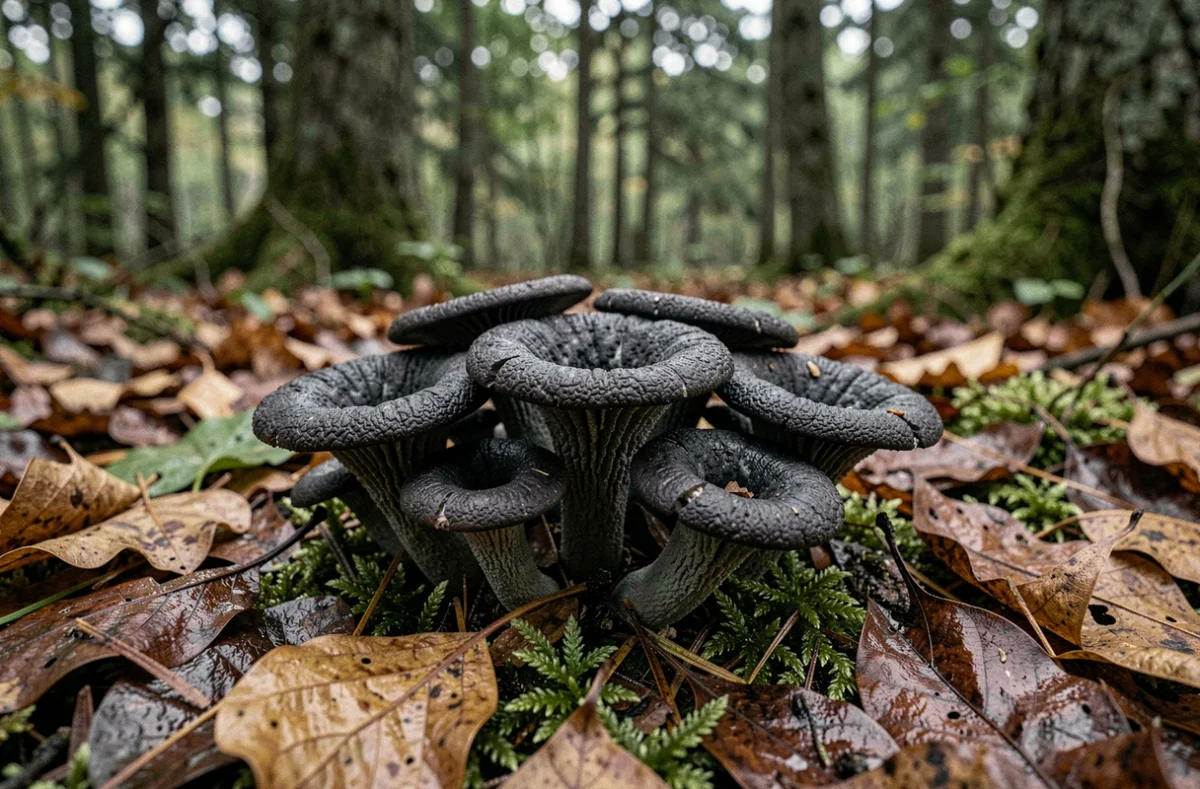
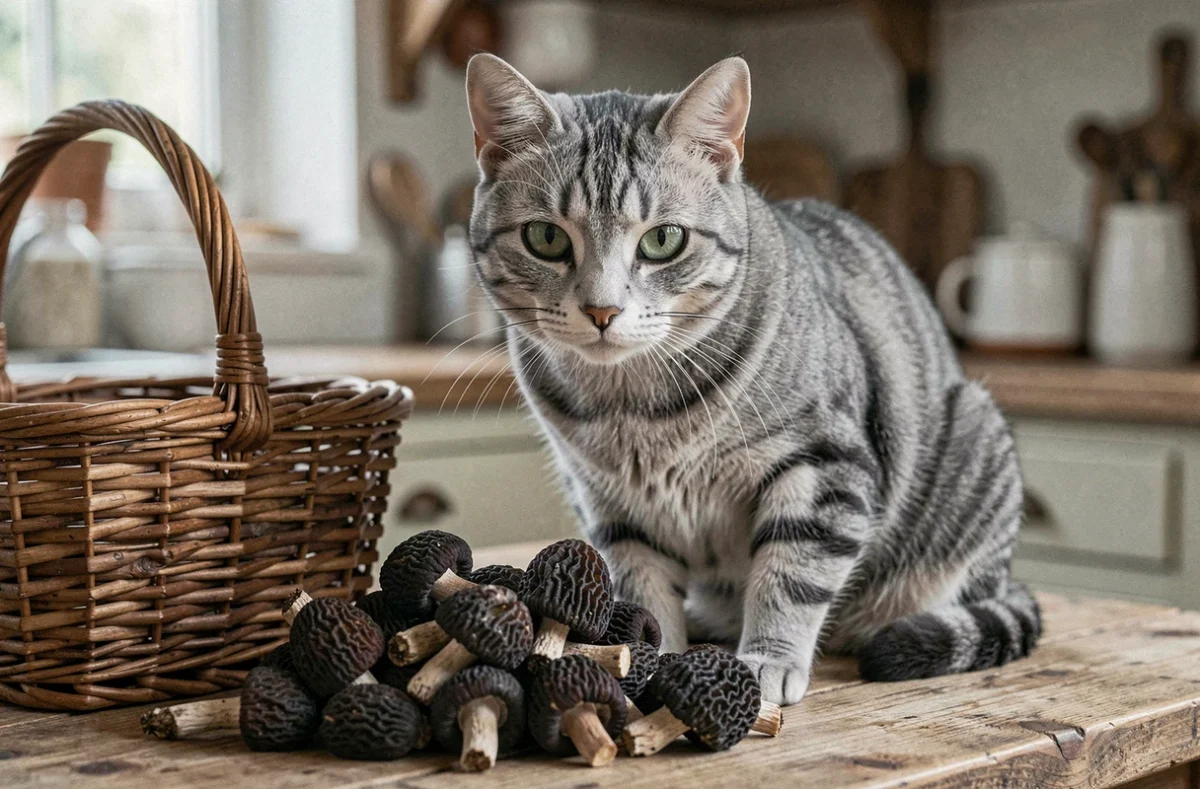
The black trumpet (Craterellus cornucopioides) is an edible mushroom prized in human cuisine. No veterinary source documents any specific toxicity of this species in dogs or cats. The real risk does not come from the mushroom itself, but from what an animal might eat instead while out on a walk or in the garden.
Species confusion: the real risk behind the black trumpet
With its funnel shape and dark color, the black trumpet resembles other mushrooms that are far less harmless. The most concerning possibility is confusion with certain webcaps in the genus Cortinarius, several species of which can cause delayed kidney damage.
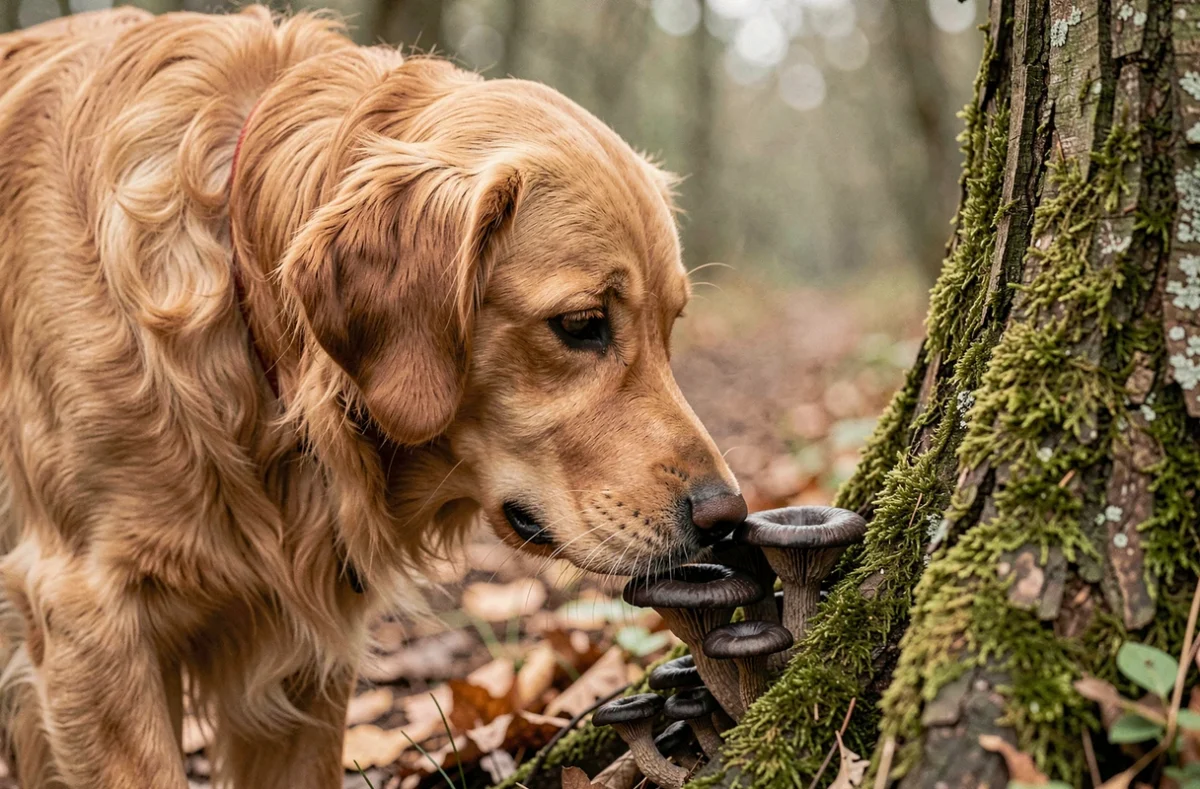
A dog nibbling on a mushroom in the woods cannot tell one species from another. Young dogs, which are especially curious, are most at risk: the tubular shape may look like a chew toy. Cats, although less likely to eat mushrooms, may also nibble one out of curiosity.
The danger black trumpets pose to animals therefore has less to do with the species itself than with the difficulty of verifying what the animal actually ate. A rough visual identification is not enough, even with a mobile app: the French National Order of Pharmacists warns that these tools can be wrong and recommends having the mushroom checked by a specialist.
Any mushroom picked or found in the garden should be treated as suspicious until a mycologist or pharmacist has confirmed its species.
Toxic mushrooms for dogs and cats: what you need to know
To understand why confusing species can be serious, it helps to distinguish between the main types of toxicity. Mushrooms that are dangerous to pets act through different mechanisms, and symptoms can appear after widely varying delays.
Hepatotoxic mushrooms and amatoxins
Death caps, small parasol mushrooms, and funeral bells contain amatoxins. These substances cause acute liver failure. Clinical signs such as vomiting and diarrhea may take six to twelve hours to appear, creating a false sense of security. Without prompt treatment, liver failure can be fatal within one to two days.
Nephrotoxic mushrooms
Some webcaps—the very mushrooms that can be confused with black trumpets—cause delayed kidney damage. The first signs may not appear until several days after ingestion. This delay makes diagnosis particularly difficult if the owner did not see the animal eat the mushroom.
Neurotoxic and gastrointestinal mushrooms
Psilocybin mushrooms, hydrazines, and isoxazoles can cause rapid neurological symptoms, from thirty minutes to six hours after ingestion: disorientation, tremors, and agitation. Other species cause only digestive problems such as vomiting and diarrhea. These are less serious but still require veterinary monitoring.
Symptoms of mushroom poisoning in dogs and cats
An animal may seem perfectly normal for several hours after eating a deadly mushroom. That is why the absence of immediate symptoms does not mean the animal is safe. The signs to watch for vary depending on the toxin involved.
Watch for the following symptoms:
- Early digestive problems: repeated vomiting, diarrhea, and excessive drooling, appearing within the first few hours after ingestion.
- Neurological signs: disorientation, tremors, dilated pupils, unsteady gait, and sometimes seizures. These may indicate a neurotoxic mushroom.
- Late symptoms (after six hours): jaundice, profound lethargy, loss of appetite, and dark urine. These signs may indicate liver or kidney damage and constitute a life-threatening emergency.
In cats, digestive symptoms may be less obvious. A cat that stops eating or suddenly isolates itself after going out in the garden should be seen by a veterinarian.
When an animal eats a mushroom: what to do
The owner’s response in the first few minutes can directly affect the outcome. There are two steps to take and one common mistake to avoid.
First, contact a veterinarian or veterinary poison control center immediately. CAPAE-Ouest (Nantes) and CNITV (Lyon) are available seven days a week. Call without waiting for symptoms to appear: in cases of amatoxin poisoning, every hour counts.
Second, keep the mushroom—or whatever remains of it—and photograph it from every angle. This will help the veterinarian or a mycologist determine the appropriate treatment. Without identification, the veterinarian has to work without a clear diagnosis and consider several possible toxins at once.
One mistake to avoid: do not try to make the animal vomit yourself. This can make the situation worse, especially if the mushroom contained irritating substances or the animal is already in distress. Only a veterinarian can decide on the appropriate decontamination method.
Prevention on walks and in the garden
Mushrooms grow in woodland, but also on lawns, in urban parks, and in private gardens. Autumn dampness encourages them to appear, sometimes overnight.
- Check the garden regularly and remove mushrooms before letting your pet roam freely, even those that look harmless.
- When walking in the forest, keep your dog on a leash or in sight at all times in areas where mushrooms are abundant.
- Learn to recognize the most dangerous local species (death caps, webcaps) so you can assess the urgency if your pet eats one.
The black trumpet itself is not among the species documented as toxic to dogs or cats. The real problem is what an animal might mistake for one, or eat nearby, in an environment where several species may grow just inches apart.