In Palermo, an improbably high ZTL sign was enough to cancel dozens of fines: invisible, it caught more than one driver off guard. In Catania, the signage changes from street to street and according to the time, making access to the central neighborhoods a lottery, even for regulars. Between hybrid vehicles sometimes tolerated and exceptions varying by municipality, the national rule gives way to a local puzzle.
For motorized travelers, the trap often closes well after their return: an envelope from Italy, a few months later, announces the penalty. Quick payment does not guarantee the disappearance of the file: at some rental companies, the administrative trace persists, ready to resurface at the slightest irregularity.
ZTL Zones in Sicily and Italy: What Are They For and How to Recognize Them?
Limited traffic zones, or ZTL, are part of the urban landscape in Italy. They aim to limit car traffic in historic centers, protect old neighborhoods, and reduce pollution. In Palermo, Catania, Trapani, or Syracuse, these perimeters have changed the way to experience the city, just like in Florence, Milan, or Rome.
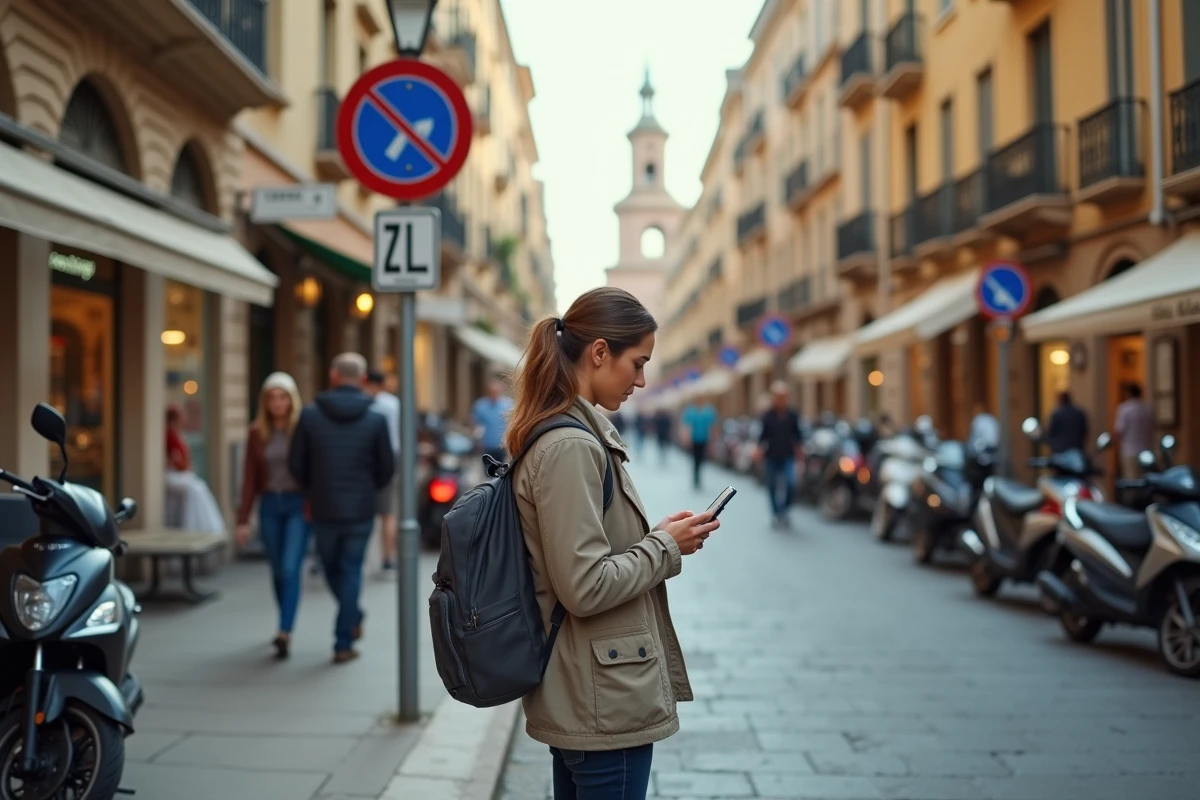
To spot a ZTL, pay attention to the red circular sign on a white background. Often, this sign is accompanied by specific hours, lists of exceptions (residents, electric vehicles, public transport), or electronic signs announcing activation periods. Access points are equipped with cameras that flash any unauthorized license plate: the penalty is issued without warning. There are generally no barriers, so vigilance is required.
Depending on the city, the rules change significantly. A few parameters deserve your attention:
- Variable application hours depending on the seasons, local holidays, or special events decided by the municipalities.
- In Milan, for example, the “Area C” and “Area B” zones have their own rules; in Sicily, restrictions evolve with tourism or events.
For those who want to navigate this administrative maze without hassle, the resource everything you need to know about the ZTL map in Sicily provides an accurate and up-to-date overview. Recommended reading before hitting the road: it helps to properly decipher the signs and anticipate the hours for traveling in Italian city centers without unpleasant surprises.
What Are the Risks and Rules to Follow When Driving in a ZTL?
Entering a ZTL zone without authorization automatically exposes you to a fine, which adds to the administrative fees charged by the car rental company. In Sicily, the amount often starts around 80 euros, sometimes more, depending on the city and the speed of payment. Detection is carried out by the camera that reads the license plate as you pass, with no human intervention or immediate contestation possible on-site.
Here are some reflexes to adopt to avoid getting trapped:
- Carefully read the hours on the signs at the entrance of the ZTL: they change on public holidays or for certain events.
- Ask your car rental company if there is a possibility of a temporary permit; in some cases, a simple form is enough to prevent the fine.
- Strictly adhere to the local traffic code: every infraction detected by radar (or autovelox) adds to the total.
Be cautious: major navigation apps, such as Google Maps, do not always signal these restricted areas. Nothing replaces paying attention to the signs on the road. At the slightest doubt, a detour to the local tourist office is better than an unpleasant letter three months later.
Practical Tips to Avoid Fines and Travel Peacefully in Sicily
Exploring the Sicilian historic centers on foot removes many constraints: passion, freedom, and serenity await, as long as you pay attention to the signage. To avoid regretting a drive, prioritize park and ride options on the outskirts of the ZTL; they ensure easy access to lively neighborhoods, away from prying cameras. Walking and public transport often remain the best option to reach temples, piazzas, and typical markets.
First and foremost, spot the red circle on a white background: it invariably signals the boundary not to be crossed without authorization. The reflex to adopt: proceed on foot or board a local bus, which is generally economical and frequent.
To make your stay more enjoyable, a few simple measures prove very useful:
- Systematically check when the ZTL is in operation: the rules vary on certain days, especially during holidays or major events.
- Ask your hotel or accommodation if there are solutions to obtain legal temporary access to the zone.
- Keep all your parking receipts and the scontrini from merchants, as they can sometimes serve as proof.
Far from the asphalt, true Sicily reveals its authentic flavors in agriturismos and local trattorias, often labeled DOP or IGP. Stay vigilant near highly touristic areas, where pickpockets and small scammers prey on the credulity of rushed visitors. Here, taking the time to soak in local habits guarantees the best of the trip: slowness, friendliness, and curious glances.
Under the Sicilian sky, walking, observing, and slowing down also drastically reduces the risk of an unpleasant postal surprise, allowing you to enjoy the alleys, with serenity added.