
The Citroën DS attracts as much for its design as for its unique mechanics. Finding a used DS that corresponds to real use, and not just a garage fantasy, requires understanding some realities that advertisements do not always show.
Used Citroën DS and access to low emission zones: the administrative trap to check before purchase
Are you considering using your DS for urban outings on weekends? The question of low emission zones arises even before that of the engine or bodywork.
The classic registration does not guarantee access to low emission zones. Each metropolitan area sets its own rules by local decree. A DS registered as a classic can circulate freely in one city and be banned in the next.
Before signing, identify the low emission zones you will regularly pass through. Consult the decree of the relevant local authority, not a general forum. The previous restriction to neighboring departments has disappeared for classic vehicles used for personal purposes, but that is not the issue today. The real obstacle is local policy regarding the circulation of older vehicles.
For those who want to delve deeper into the subject of DS available on the market, it is possible to learn more on Actu en vrac, which lists advertisements and dedicated advice.
Classic registration and Citroën DS: conditions and limits for restoration
The classic status seems attractive. It offers an exemption from periodic technical inspections and facilitates certain procedures. In practice, it imposes a strict framework that can complicate the life of a DS buyer.
To obtain this classic registration, the vehicle must be at least thirty years old, no longer in production, and above all retain its original technical characteristics. A DS equipped with a different engine, modified braking, or non-compliant mechanical conversion risks rejection during the application process.
Why is this a concrete problem? Because many DS on the market have undergone modifications over the decades. A seller may present a car as “restored” while the changes make it incompatible with classic status. Check the consistency between the serial number, engine type, and mentions on the old registration certificate.
A modified restoration can degrade the administrative value of the vehicle, even if it improves its performance. This is a consideration to make right from the search for advertisements.
Structural corrosion on a DS: the areas that photos never show
The body of a Citroën DS forms a complex assembly of overlapping sheets. This architecture retains moisture in hard-to-reach corners. This is the main weak point of the range, across all versions.
The critical areas to inspect are not the ones that are immediately visible:
- The floors and front and rear beams, where corrosion progresses between the layers of metal without visible external signs for a long time
- The location of the fuel tank, accessible only after removing the rear bench, the closing sheet, and the tank itself, which explains why many sellers do not inspect it
- The rear crossmember, which houses the beam anchors, often attacked from the inside while the outside appears sound (an endoscope is sometimes necessary to assess the actual condition)
- The roof edge, the tops of the rear wheel arches, and the trunk floor, areas regularly perforated on untreated examples
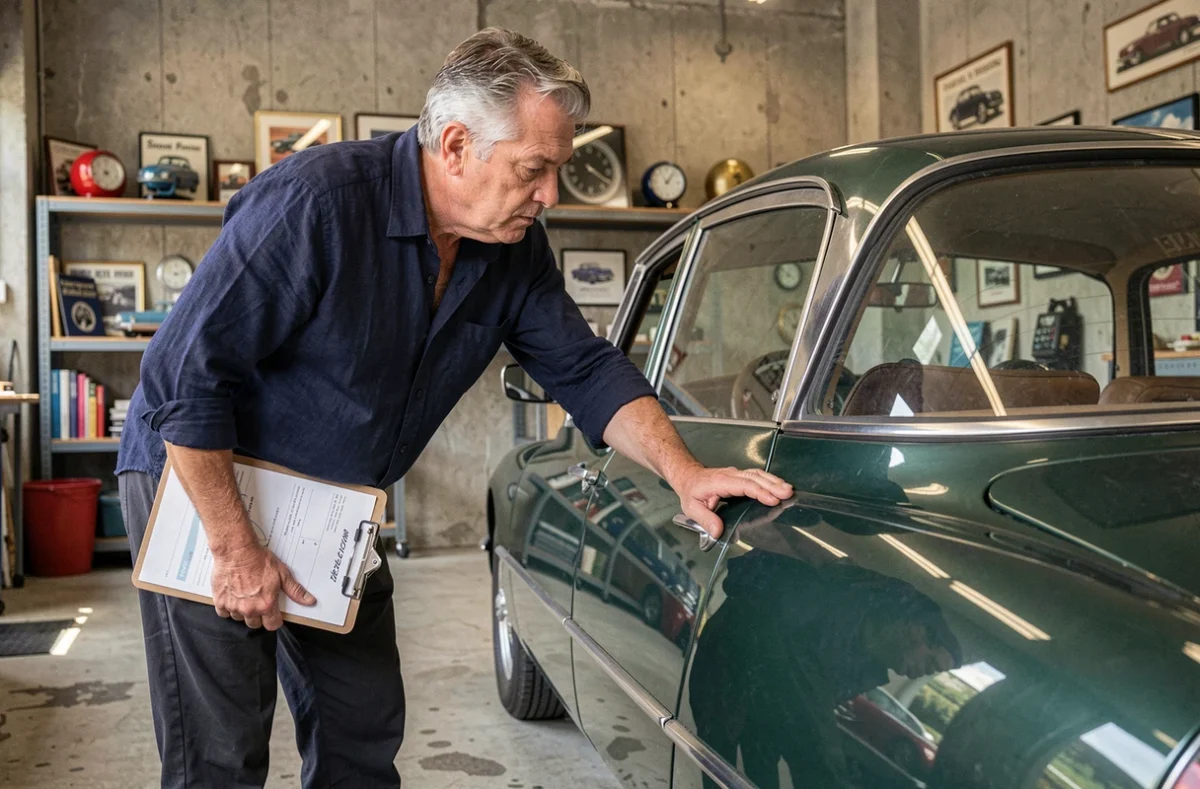
An example without visible perforating corrosion may hide a severely weakened structure. The only way to assess the actual condition is a physical examination by a DS specialist, not a quick visual inspection in a parking lot.

Displayed price and actual value of a used DS: understanding the gap
The market for vintage DS presents often significant discrepancies between the asking price in advertisements and the actual administrative or technical value of the vehicle. This gap can be explained by several factors.
The cost of a serious restoration of the structure (bodywork, anti-corrosion treatment, bringing the hydraulic system back into compliance) represents a significant part of the total budget. A low purchase price often hides heavy work to be anticipated.
The technical inspection remains a useful comparison tool between two similar DS. Even though classic vehicles benefit from a lighter regime, requesting the latest report allows for the identification of documented structural defects. A seller who refuses to provide it sends a clear signal.
Before negotiating, have the cost of repairs estimated by a DS specialized workshop, independent of the seller. This is the only way to know if the displayed price corresponds to the actual mechanical and structural condition.
Choosing your Citroën DS according to its actual use
Not all buyers are looking for the same thing. A DS intended for monthly outings on departmental roads does not pose the same requirements as a weekend urban DS subject to traffic restrictions.
Ask yourself two simple questions before searching:
- Will the car regularly drive in urban areas (and therefore potentially in low emission zones)?
- Are you willing to entrust the maintenance of the hydraulic system to a specialist, knowing that few general garages master this system?
- Does your budget include a margin for bodywork repairs discovered after purchase?
A well-inspected DS that matches its use protects better than a prestigious model bought blindly. The choice of model (sedan, station wagon, Pallas) matters less than the structural condition and the administrative coherence of the vehicle with your project.
The Citroën DS remains a unique automobile, capable of providing a driving pleasure that few modern cars can match. But this pleasure comes at a price: that of rigor in the purchase. Checking ZFE access, classic compliance, and hidden corrosion before signing transforms a dream car into a solid acquisition.