
Three aesthetics have dominated fashion-inspired threads for several seasons: the Clean Girl, Old Money style, and the wrong jacket theory. They all share a common point: they were designed for posed photos, rarely for a day that involves meetings, errands, and dinner. Comparing their actual requirements in terms of time, budget, and versatility allows us to identify what is worth keeping and what belongs to stylistic fantasy.
Clean Girl, Old Money, and wrong jacket theory: what each trend really demands
Before diving into these codes, it’s better to measure their concrete entry cost. The table below contrasts the three aesthetics based on everyday criteria.
| Criterion | Clean Girl | Old Money | Wrong jacket theory |
|---|---|---|---|
| Color palette | Neutrals (beige, white, taupe) | Cool neutrals (navy, gray, cream) | Free, the contrast takes precedence |
| Number of key pieces | Few (clean basics) | Higher (blazers, loafers, trench coats) | Variable (one piece is enough) |
| Preparation time | Moderate (skin, pulled hair, fine jewelry) | High (total head-to-toe coordination) | Low (one dissonant element) |
| Perceived budget | Accessible (fast fashion possible) | High (noble materials expected) | Very variable |
| Office adaptability | Strong | Strong if classic dress code | Average (may surprise) |
The Clean Girl has evolved into a more refined, controlled minimalism than the original spontaneous natural look. This shift involves almost professional skincare and impeccable finishes, which increases the actual preparation time.
The Old Money style relies on materials that are visible: wool, cashmere, leather. Reproducing the effect with affordable alternatives works, but the coherence of the whole requires a wardrobe that is already well-constructed.
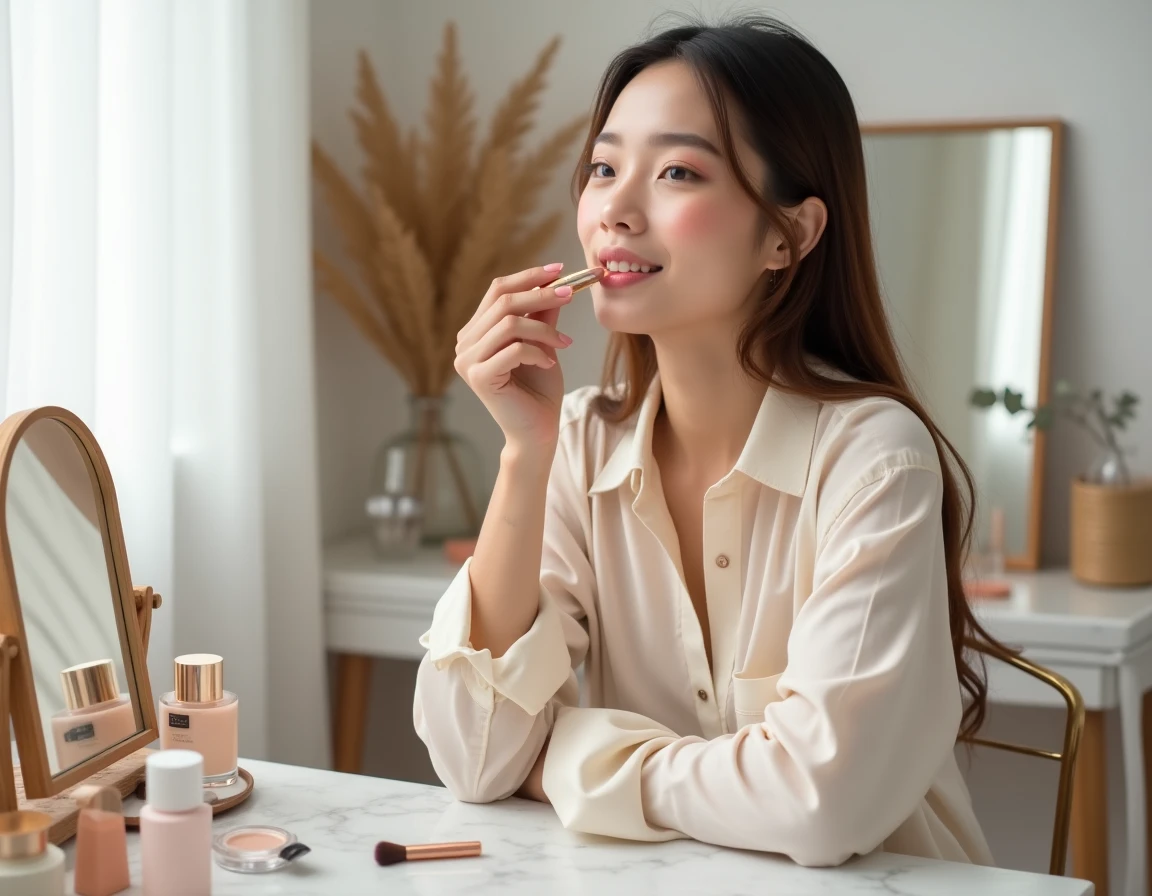
The wrong jacket theory, on the other hand, only requires one deliberately mismatched piece compared to the rest of the outfit. It is the least costly in terms of effort and budget, and the easiest to test without revamping your wardrobe. Readers looking for concrete outfit ideas will find selections that combine these codes with truly wearable pieces on Mademoiselle Emma.
Women’s fashion trend: three traps that make a look unrealistic
Micro-trends circulate quickly, but their translation into everyday outfits faces recurring obstacles.
The trap of the single palette
Wearing exclusively neutral tones requires rigorous maintenance: white yellows, beige stains, cream wrinkles. In the office or while commuting, these colors are unforgiving. Keeping one or two neutral basics in rotation and complementing with a bold shade (burgundy, pine green) offers the same clean look without the maintenance hassle.
The trap of the total look
The photographed Old Money aesthetic works because each element has been selected for the image. In real conditions, mixing one coded piece with the rest of your existing wardrobe produces a more natural result than an outfit entirely composed around a single code.
The trap of invisible care
The Clean Girl relies as much on beauty as on fashion: glowing skin, groomed brows, hydrated lips. This skincare aspect represents an investment in time and products that visual inspirations often overlook. A well-chosen moisturizer and a tinted balm cover most of the desired effect without a ten-step routine.
Adapting aesthetic codes to a real week of an active woman
Rather than reproducing a trend from A to Z, the most effective logic is to extract from each a reusable principle for everyday life.
- From the Clean Girl, keep the principle of minimalist yet visible accessories: a pair of gold hoops and a simple watch are enough to structure a look without adding preparation time.
- From Old Money style, retain the straight blazer worn over jeans or fluid trousers. It’s the piece that transfers the most visual credibility without imposing a complete wardrobe.
- From the wrong jacket theory, borrow the reflex of deliberate contrast: a suit jacket over a light dress, a technical jacket over a midi skirt. One single contrast is enough to create an identifiable style.
This extraction approach avoids two common pitfalls. The first: buying pieces that only work with one look. The second: abandoning a trend after two weeks because it required too much coordination.

Colors and silhouettes: what lifestyle trends really change in the wardrobe
French fashion media now structure their content around named micro-trends rather than generic styles. Butter yellow, beige pants, barrel jeans, or short trench coats are all precise markers that facilitate shopping choices.
This granularity has a direct advantage: it allows you to target a single purchase per season instead of renewing an entire wardrobe. A well-cut beige pant fits equally well into a Clean Girl reading as into an Old Money wardrobe.
On the other hand, chasing every micro-trend leads to recreating the opposite problem: a wardrobe filled with very dated pieces. The most reliable filter remains the question of reusability. A piece that only works with one type of outfit or one context does not belong in a wardrobe designed to last.
The most photographed aesthetics are rarely the most wearable. Extracting a principle, a piece, or a gesture from each trend, and then grafting it onto already owned basics, produces a coherent style without dependence on a trend that will fade the following season.