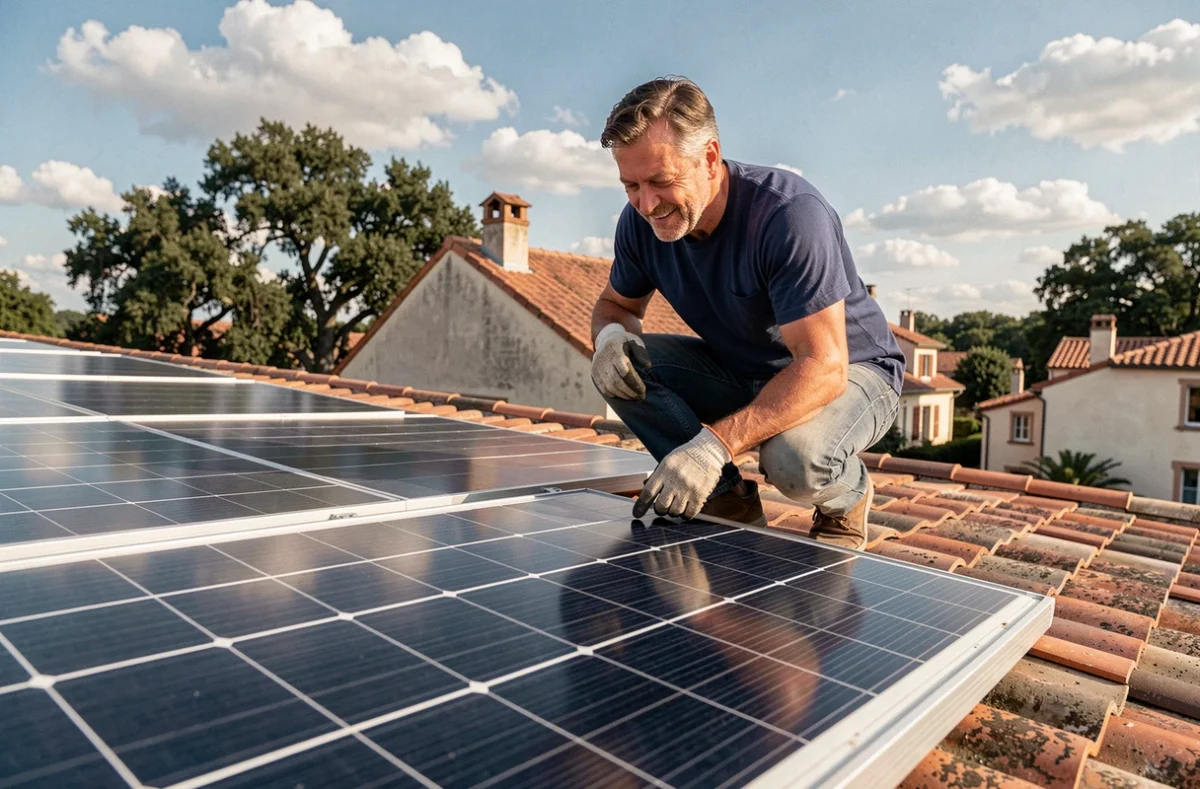
The removal of the self-consumption bonus in June 2026 has reshuffled the cards of residential solar energy. The profitability calculation of a photovoltaic installation no longer relies on the same parameters, and the trade-off between individual autonomy and local energy sharing needs to be considered before any sizing.
Collective self-consumption and local solar energy sharing: the blind spot of residential projects
Collective self-consumption was significantly relaxed in 2025-2026. The power ceiling has been raised and, since 2026, the tax on shared electricity has been abolished on the portion consumed in this setup. This framework opens up concrete possibilities for condominiums, housing estates, and neighborhood groups.
We observe that most residential solar guides still reason in terms of isolated single-family homes. Total autonomy requires oversized production and storage to cover winter lows. By pooling production among several households, consumption peaks and troughs are mechanically smoothed out. A household absent during the day can transfer its surpluses to a neighbor who is working from home, without transit through the long-distance network.
Collective self-consumption does not eliminate the connection to the grid. It reduces the share of electricity purchased at the supplier’s rate and locally values what would have been injected at a buyback price much lower than the purchase cost. In a housing estate of a few houses, the overall self-consumption rate far exceeds that of a single household without requiring oversized batteries.
To structure such a project, specialized platforms facilitate the legal and technical setup. Individuals comparing residential installation offers on need-sun.fr can integrate this collective dimension right from the quoting phase.
Solar sizing without a bonus: what changes for the inverter and storage
Without a self-consumption bonus, over-investment in an overly powerful installation is no longer compensated by public aid. Sizing must align with the actual consumption profile, not a logic of maximizing peak power.
Hybrid inverter or micro-inverters
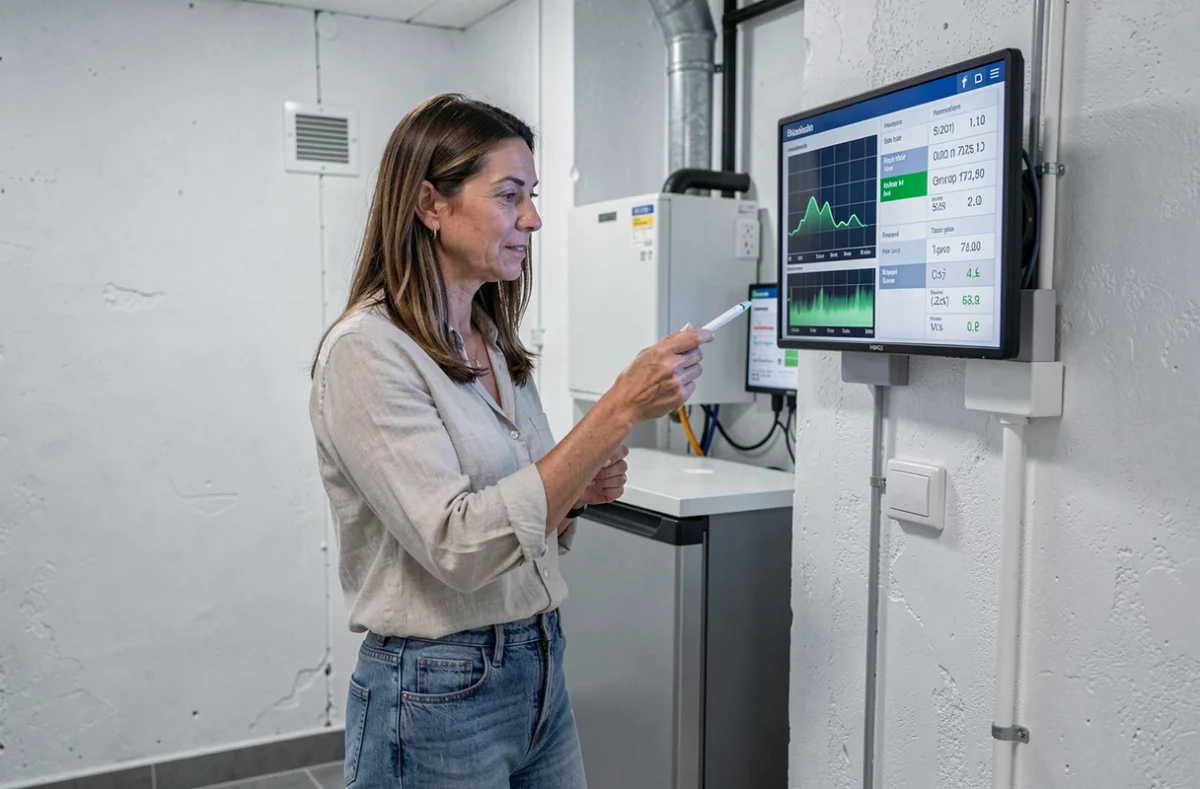
The choice of inverter determines the future flexibility of the installation. A hybrid inverter manages both photovoltaic production, battery storage, and grid injection. It allows for the addition of a battery later without overhauling the system.
Micro-inverters, placed under each panel, maximize production in case of partial shading. However, adding storage with micro-inverters involves additional equipment (AC coupler) that complicates the architecture.
Battery: balancing capacity and profitability
Storage remains the most expensive component of a residential installation. Without a subsidy, we recommend calibrating the battery to the household’s actual nighttime consumption rather than the theoretical goal of total autonomy. An oversized battery accumulates partial cycles that do not improve profitability.
- Measure the average nighttime consumption over several months before choosing a storage capacity (Linky reading or smart meter).
- Prefer LFP (lithium iron phosphate) chemistry for its cycling lifespan, even if the energy density is lower than NMC.
- Check the compatibility of the battery with the chosen inverter: not all inverter-battery pairs are interoperable.
Plug-and-play solar kit: regulations and real limits
Plug-and-play solar kits are appealing due to their accessibility. One or two panels plugged into an outlet are enough to cover the baseline consumption of a household (standby devices, refrigerator, internet box). Regulations now more precisely frame these devices.
The maximum power allowed for direct connection remains limited. Beyond the regulatory threshold, a declaration to Enedis is mandatory, and the installation must comply with current electrical standards. A plug-and-play kit does not replace a structured installation for a household whose consumption exceeds simple baseline needs.
The interest of these kits lies in two specific cases:
- A tenant who cannot undertake work on the roof but has a well-oriented balcony or terrace.
- A homeowner testing solar power before investing in a complete installation, to validate the actual sunlight exposure of their site.
- A complement to an existing installation at a remote consumption point (garage, workshop).
Grid or total autonomy: the real calculation for a solar house
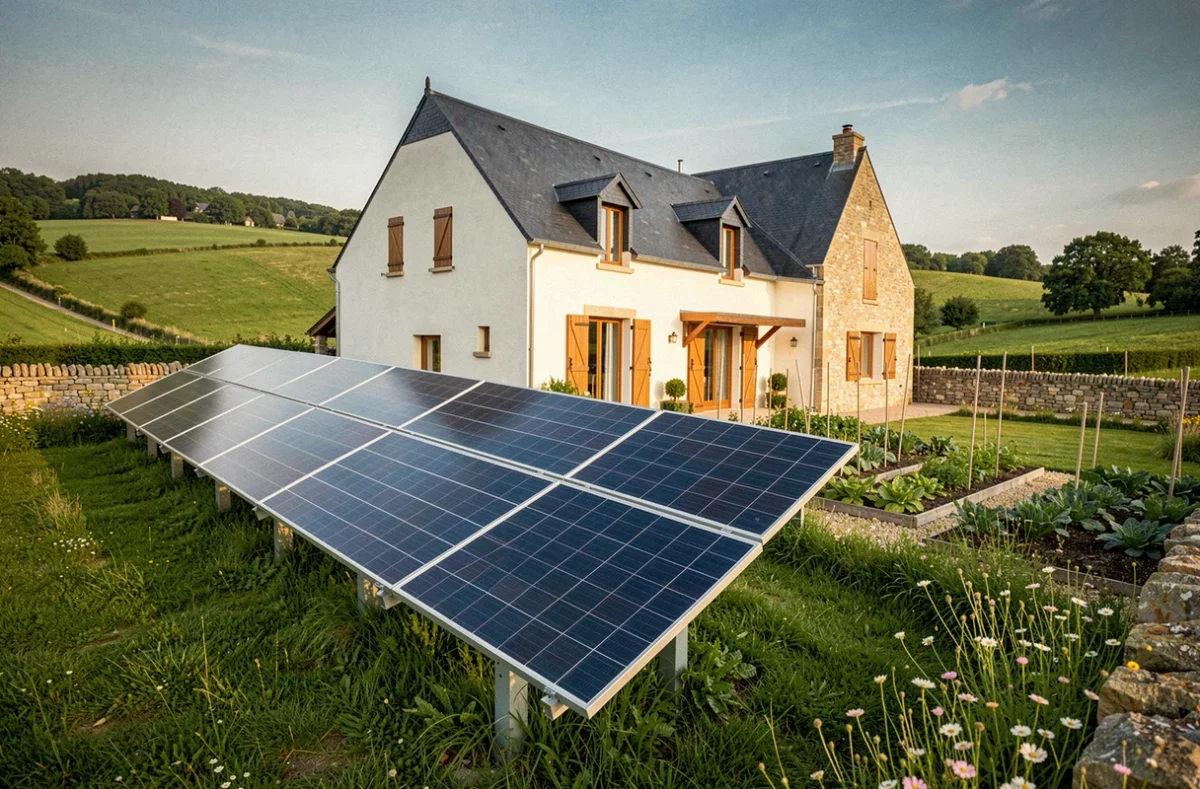
Complete autonomy from the electrical grid implies covering the worst weeks of the year, not the best. In winter, photovoltaic production drops significantly while consumption increases (lighting, auxiliary heating). Covering this gap without the grid requires a battery park and panel area disproportionate to the average annual need.
Staying connected to the grid while maximizing self-consumption remains the most economically rational configuration for the majority of households. The grid acts as a free buffer: it absorbs summer surpluses and provides winter supplements.
Complete disconnection from the grid is only justified in situations of geographical isolation where the connection cost exceeds that of a complete autonomous system with oversized storage. For a house already connected, the financial gain from disconnection is almost zero, or even negative.
With the removal of the bonus and the relaxation of collective self-consumption, the focus shifts towards hybrid setups. A well-sized household in panels and moderate storage, connected to the grid and participating in a local collective scheme, optimizes every kilowatt-hour produced without over-investing in under-utilized equipment for eight months out of twelve.